Research
The DNA inside each of our cells would span over two meters if fully stretched out, yet is highly condensed within nuclei typically around 5 μM (five millionths of a meter) in diameter. This condensed form of DNA, called chromatin, is made possible by the association of DNA with histone proteins, as well as chemical modifications to DNA and associated histone proteins, called epigenetic modifications. The repertoire of proteins and chemical modifications associated with DNA is unique in each cell type and tissue, giving rise to distinct ‘epigenomes,’ which drive distinct patterns of activation for many of our ~20,000 genes. This provides a mechanism for the existence of thousands of unique cell types in the human body, despite each containing the same genome.
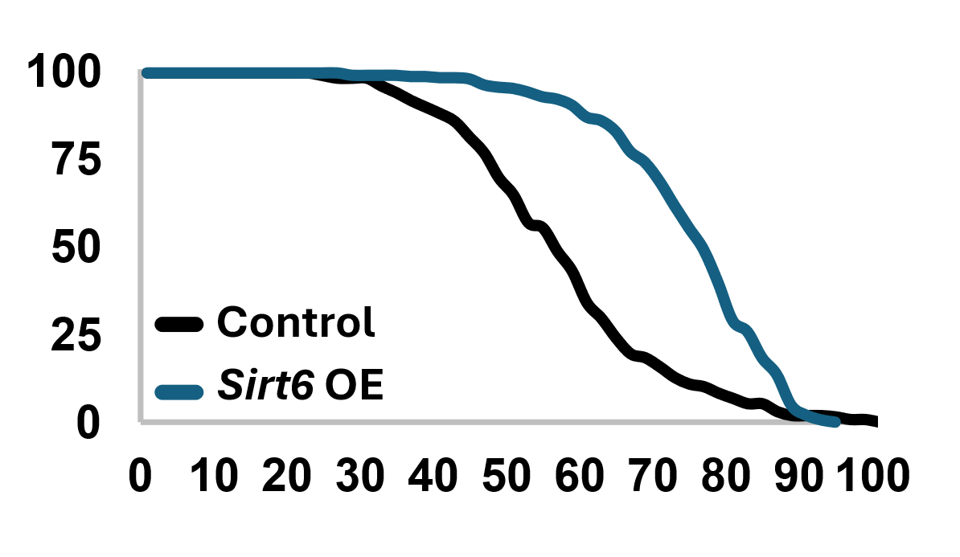
A significant portion of our current research focuses on the enzyme Sirt6 which acts as a potent epigenetic regulator by removing acetyl groups from histone proteins. Sirt6 has long been known to function as an anti-aging gene across multiple species (including humans) and in 2022 we reported that increasing Sirt6 levels in fruit flies can extend median lifespan up to 35%, through a novel mechanism which involves reduction of protein synthesis rates. We also study another lesser-studied epigenetic regulator gene called Jim, which we have found to play essential roles in metabolic health and genome integrity.
Our research program centers on three interconnected areas, united by a focus on the epigenome:
Longevity and Healthspan
A major research focus of the lab is epigenetic mechanisms that promote longevity and healthspan - the period of life spent free from disease and disability. The epigenome changes significantly during aging, leading to cellular dysfunction and disease. We seek to (i) better understand how the epigenome changes with age, (ii) the consequences of these changes, and (iii) to identify epigenetic interventions that promote healthy aging in humans. A current major focus of the lab is understanding the mechanisms by which the longevity gene and epigenetic regulator Sirt6 can increase healthy lifespan.
Epigenetic Regulation of Gene Expression
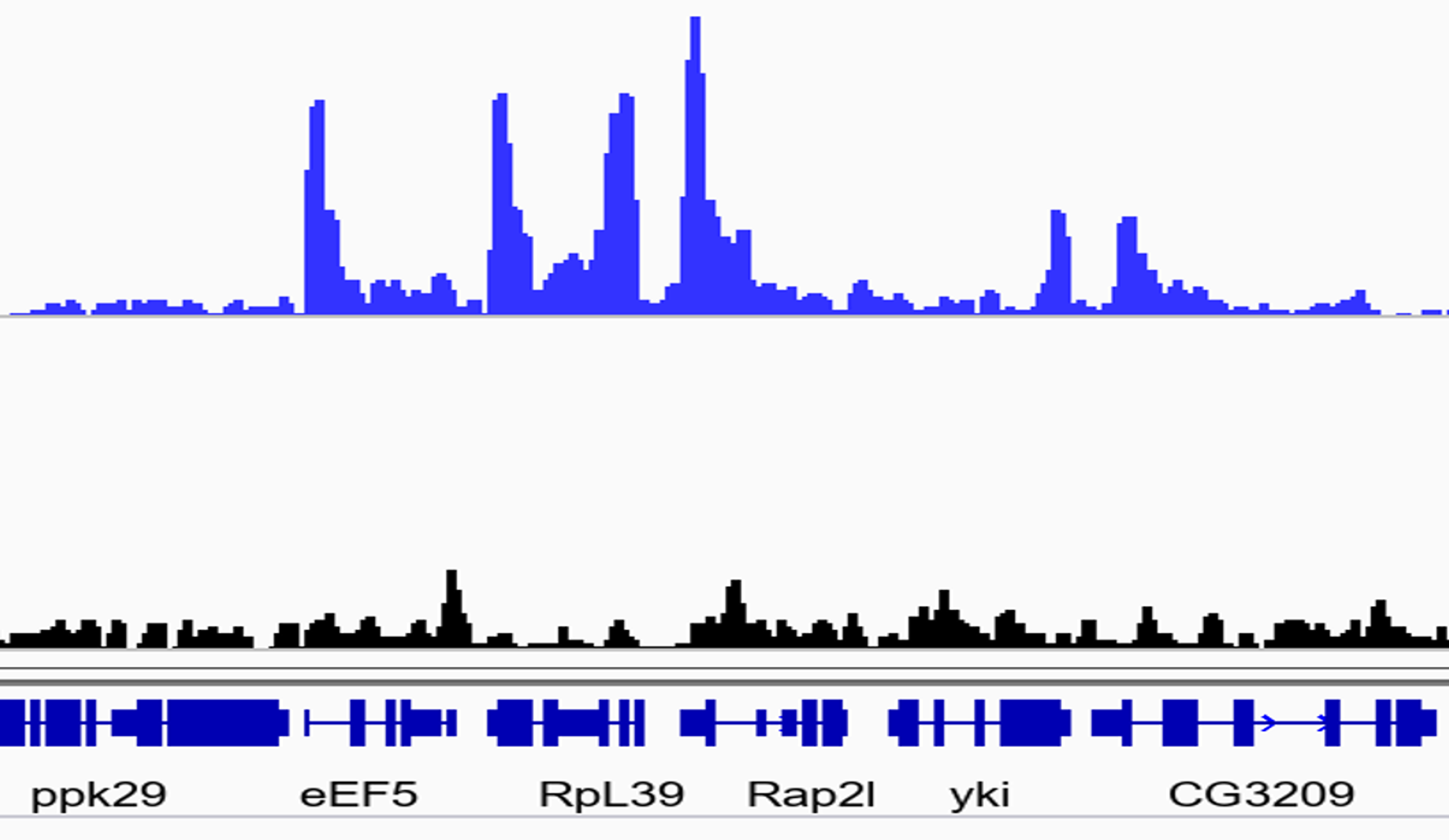
Epigenetic modifications are added and removed by special classes of enzymes, broadly termed “epigenetic regulators.” Despite extensive study, the full impact of many epigenetic modifications on gene expression is not completely understood, nor is the mechanism of action of epigenetic regulator enzymes which add and subtract the modifications. Our lab seeks to better understand (i) how epigenetic regulators achieve target gene specificity, (ii) mechanisms of epigenetic regulator cellular function and enzymatic activity, and (iii) how the presence or absence of specific epigenetic modifications impacts gene expression, both under standard conditions and under conditions of stress, aging, and disease. We are particularly interested in the mechanisms by which two epigenetic modifier enzymes, Sirt6 and Jim, regulate the epigenome and gene expression in different conditions.
Neurodegeneration
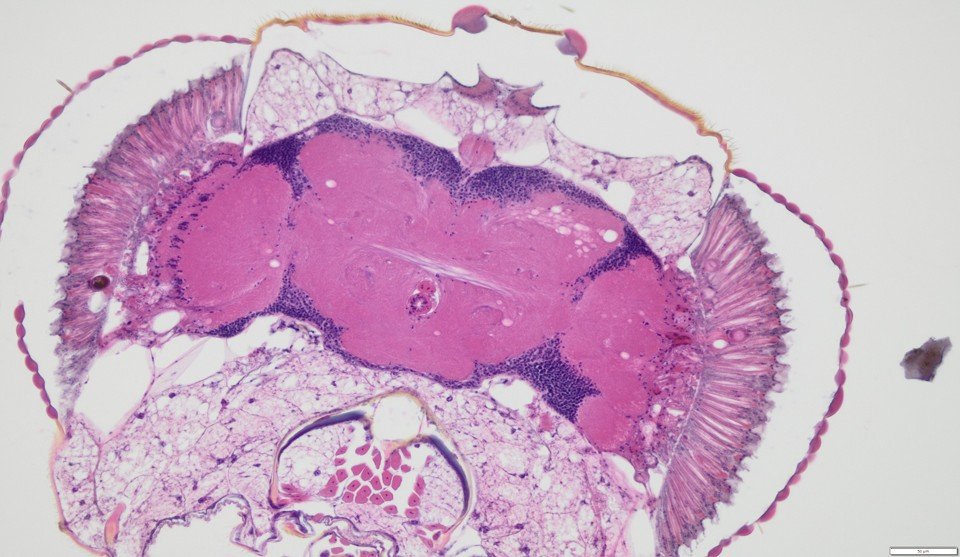
Age-related neurodegenerative diseases, including Alzheimer’s Disease, represent a growing societal challenge. We study how aging-associated epigenetic changes contribute to neuronal dysfunction and degeneration, and how modifying epigenetic regulators can slow or reverse neurodegenerative processes in experimental models. In particular, we are interested in how the epigenetic regulator gene Sirt6 may play a neuroprotective role in Alzheimer’s disease and other neurodegenerative diseases