Longevity and Healthspan
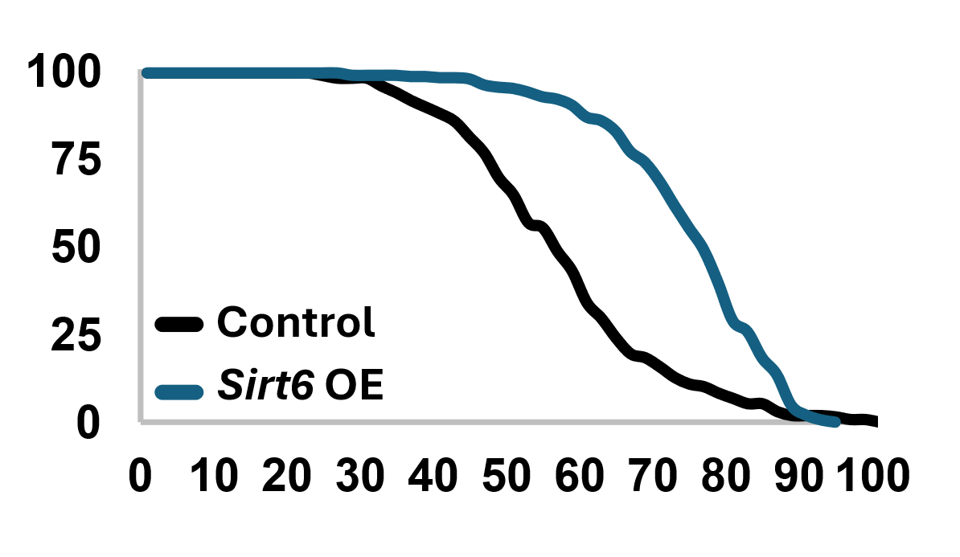
A major research focus of the lab is epigenetic mechanisms that promote longevity and healthspan - the period of life spent free from disease and disability. The epigenome changes significantly during aging, leading to cellular dysfunction and disease. We seek to (i) better understand how the epigenome changes with age, (ii) the consequences of these changes, and (iii) to identify epigenetic interventions that promote healthy aging in humans. A current major focus of the lab is understanding the mechanisms by which the longevity gene and epigenetic regulator Sirt6 can increase healthy lifespan.
Advanced age is the strongest risk factor for most chronic diseases. Individuals over 65 years of age make up the largest demographic in the U.S. and this group is expected to grow substantially, presenting an unprecedented healthcare challenge. The “Geroscience Hypothesis” predicts that targeting the aging process itself is the most effective way to delay or prevent the onset of multiple age-related diseases simultaneously. Thus, the development of interventions which target aging at the cellular and molecular level will be a critical step in addressing this healthcare burden.
Epigenetic modifications on our genomes erode and remodel considerably during the aging process, and these changes are a primary driver of age-related dysfunction and disease. Epigenetic modifications are also readily modifiable, making them an appealing therapeutic target and, remarkably, interventions that target the epigenome can reverse age-related impairments and extend lifespan in laboratory animals. In the Taylor Lab, we seek to identify strategies to modify and protect the epigenome in a manner which counteracts age-related disease and dysfunction.
Our current research focuses on how Sirt6 acts to extend lifespan and healthspan. We previously discovered that increasing levels of Sirt6 in fruit flies can extend lifespan by up to 35% and prevent age-related decline in physical function. We now seek to better understand the pathways by which Sirt6 functions as an anti-aging gene, with the long-term goal of helping development of therapeutic strategies which target Sirt6 to treat age-related disease in humans.